
Water Heater Making Popping or Rumbling Noises? Sediment Explained
Quick Answer: Popping, rumbling, or knocking from a tank water heater almost always comes from sediment. Minerals in the water settle into a hard layer on the bottom of the tank, water gets trapped underneath, and when the burner or lower element fires, that trapped water flashes to steam and forces its way up through the crust. The bubbles collapsing and the crust shifting are the sounds you hear. The noise itself is not dangerous, but it is a signal that the tank is running hotter and working harder than it should, and it usually means the tank is overdue for a flush or, on an older unit, close to the end of its service life.
You are standing in the kitchen and the water heater in the garage starts making a sound like popcorn in a covered pot. A few slow pops, then a low rumble, then it settles down. It happens most when someone has just run a long shower or a load of laundry, and it seems to be getting louder every month.
That noise is not the tank about to fail on you. It is a tank trying to heat water through a layer of hardened mineral sediment, and once you understand what is happening down there, the whole thing makes sense. Along the Gulf Coast, where the water carries a heavy mineral load, it is one of the most common water heater calls a plumber takes. Here is what the sound is telling you, why the water in this part of Texas makes it worse, and what actually needs to happen next.
What That Popping and Rumbling Actually Is
The sound is steam, not metal. Understanding the mechanism makes every other decision easier.
Minerals fall out of hot water
Calcium and magnesium dissolved in your water stay put while it stays cold. Heat them and they drop out of solution. Gravity pulls the solids to the tank bottom, forming a layer that starts as grit and bakes into crust.
Steam under the sediment
On a gas heater, the burner sits under the tank bottom; on electric, the lower element sits above it. So heat passes through the sediment. Trapped water superheats, flashes to steam, and blasts upward. Each collapsing bubble pops; hundreds rumble.
Why it comes and goes
You hear it most after a heavy hot water draw. The tank just refilled with cold water, so the burner runs a long, hard cycle to reheat it. That is when the most steam forms under the crust. Then quiet.
The crust also moves
On badly scaled tanks, chunks of hardened sediment break loose and get shoved around by steam and incoming cold water. That is where the deeper knocking and banging comes from, the sounds that make people think something is loose inside.
What Sediment Does to the Tank Over Time
The noise is the symptom people notice. The wear is the part that matters.
The burner runs longer
Sediment insulates. A layer of hardened mineral between flame and water slows heat transfer, so the burner or element stays on longer to hit the same setpoint. Longer cycles waste heat.
The steel gets hotter than it was designed to
This is the real damage. Under thick sediment, a gas tank bottom runs far hotter than clean steel would. That heat stresses the glass lining, and cracked lining lets steel corrode.
Electric elements burn out
On electric heaters, sediment buries the lower element. A buried element overheats, scales over, and fails. That is why a scaled electric tank runs noisy and runs out of hot water.
You lose usable capacity
Every inch of sediment is an inch no longer holding hot water. A tank that gave you two back-to-back showers starts giving one and a half, with slower recovery between draws.
Other signs travel with the noise
Rusty or cloudy hot water, slower recovery, running out of hot water faster than before, and a tank making noise where it never did all point to the same condition.
Tip: Note when the noise happens, not just that it happens. Popping and rumbling right after a big hot water draw points squarely at sediment, because that is when the burner is working hardest against the crust. Sizzling or hissing that runs constantly is a different problem, often condensation or an actual leak dripping onto the burner. A single sharp bang when a faucet shuts off is not the water heater at all, that is water hammer in the supply piping. Getting the timing right saves a lot of guessing.
What You Can Safely Check Yourself
There are a few things worth doing before anyone comes out, and a few things worth leaving alone.
Check the thermostat setting
Most manufacturers advise no higher than 120 degrees Fahrenheit. A tank running hotter than needed precipitates minerals faster and drives worse scaling. If someone turned the dial up years ago, correct it.
Listen at the tank, not from the next room
Stand beside the unit while it fires. Popping and rumbling from inside the tank body is sediment. Ticking near the piping is usually pipes expanding against a strap, a nuisance, not a fault.
Look at the drain valve and the fittings
Rust stains, crusty white mineral buildup, or moisture at the fittings and base change the picture. A noisy tank that is also weeping is a different conversation than one that is dry.
Know the tank's age
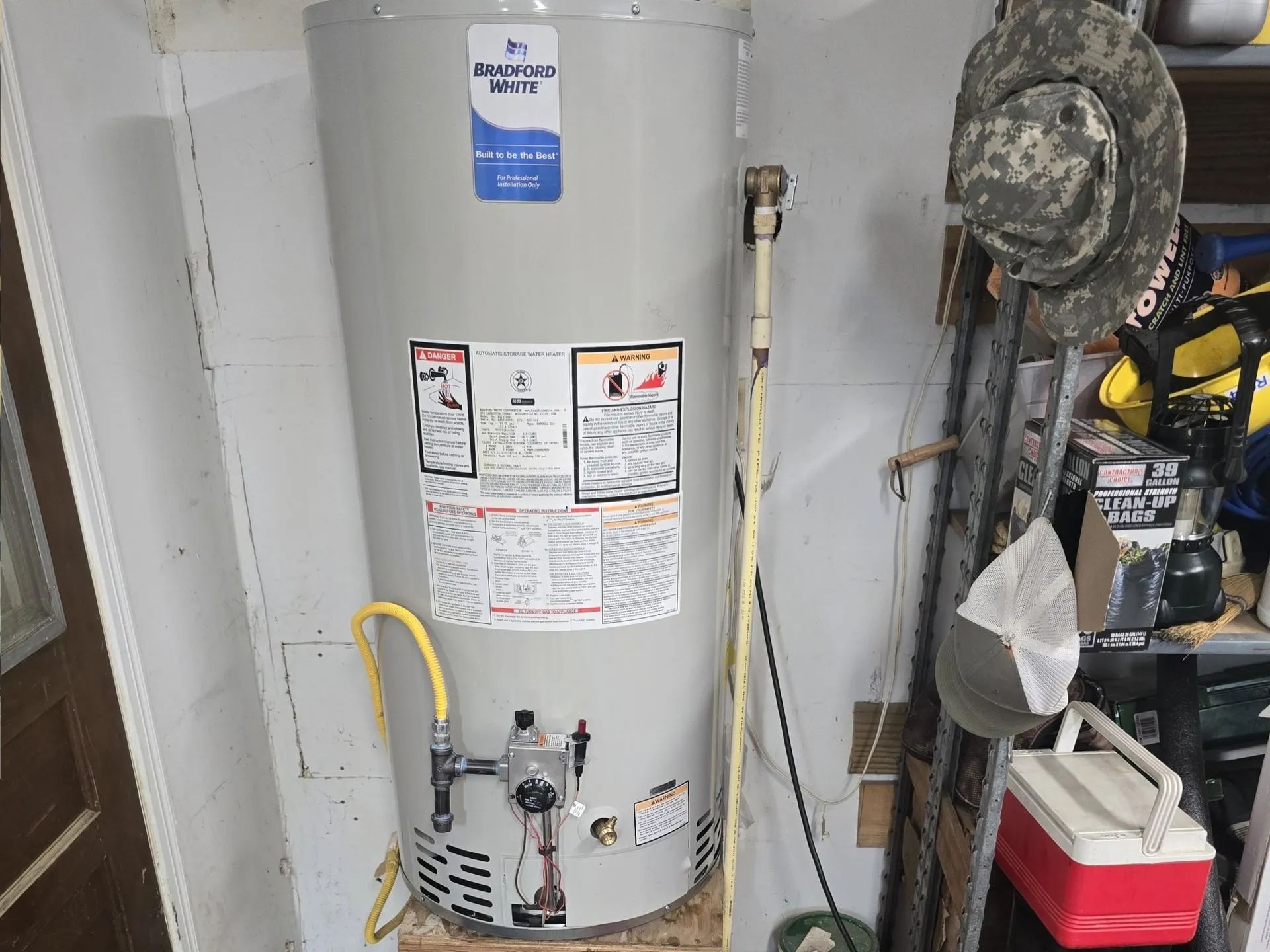
The manufacture date is coded into the serial number on the data plate. Most tank water heaters last eight to twelve years, and a heavily scaled, unmaintained tank lands at the short end.
Draining and flushing is a real job
Shut off the gas or breaker, let the water cool, run a hose from the drain valve, and drain until clear. On heavily scaled tanks, sediment clogs the valve, stranding you halfway.
When Flushing Will Not Fix It
Flushing solves the problem in a lot of tanks. It does not solve it in all of them, and knowing the difference matters.
Hardened sediment does not rinse out
On a long-neglected tank, sediment cements into a solid crust. Gravity draining moves loose material and leaves the crust behind. Breaking it up takes a flushing tool, and sometimes it will not budge.
Noise that continues after a flush is a message
If a properly flushed tank still rumbles, the sediment is baked on, and no amount of further flushing will change that. From here, the bottom runs hot for the rest of its life.
Flushing a long-neglected tank can expose a weak spot
On old tanks, sediment sometimes sits on a corroded, thinning bottom. Stirring and draining it can reveal a leak the sediment was plugging. A reason to have it looked at, not avoided.
The anode rod is part of the same story
The sacrificial anode rod corrodes on purpose so the steel tank does not. Inspect it yearly and replace it when spent, often every three to four years for many households.
Warning: Do not turn the power back on to an electric water heater unless the tank is completely full of water. The heating elements have to be submerged. Energize a partially drained electric tank and the exposed upper element burns out in seconds, leaving you with no hot water on top of the original problem. On gas units, do not attempt to relight the pilot if you smell gas near the appliance. Leave it alone, get people out, and have it checked.
How a Plumber Approaches a Noisy Tank
A tank that pops is not automatically a tank that needs replacing. The work is figuring out which one you have.
The first questions are age, history, and symptoms. A five-year-old tank that has never been flushed and rumbles after a long shower is a maintenance candidate. A twelve-year-old tank that rumbles, delivers rusty hot water, and shows corrosion at the fittings is telling a different story, and pouring maintenance into it may only buy a short reprieve.
From there the process is physical. The unit gets shut down safely on the gas or electrical side, the tank is drained and flushed until the discharge runs clear, and the material that comes out gets looked at, because the volume and the color of it say a great deal about what is going on inside. The anode rod comes out for inspection. The temperature and pressure relief valve gets tested, since it is the tank's primary safety device and manufacturers advise a professional look at it periodically. The drain valve, the fittings, and the tank base get checked for corrosion and weeping. The thermostat setting gets verified.
What you get at the end is an honest read: the tank flushed clean and the noise went away, or the sediment is baked on and the noise is going to stay, or the tank has problems beyond the sediment and you should be planning ahead rather than reacting to a flood. For homes on hard water, that conversation usually also covers whether treating the water upstream makes sense, since the sediment layer will build right back up in a new tank fed by the same supply.
Frequently Asked Questions
Is a popping or rumbling water heater dangerous?
The noise itself is not an emergency. It is steam escaping a sediment layer. It does mean the tank bottom runs hotter than designed, shortening its life. Treat it as a maintenance signal, but do not ignore it.
Will flushing the tank stop the noise?
Often, yes. Rumbling and popping from loose or moderate sediment usually quiet down considerably after a proper flush. If the tank has gone years without maintenance and the sediment has hardened, flushing may only reduce the noise, not eliminate it.
How often should a water heater be flushed in this area?
Manufacturers generally recommend flushing at least once a year, and about every six months in hard water. Houston-area water carries enough calcium and magnesium that the more frequent interval is safer, especially if you have already noticed noise.
Why does my electric water heater make noise but my neighbor's gas one is quiet?
On electric units, sediment buries the lower heating element, so it scales and gets loud. On gas units, sediment sits between the burner and water. Both build sediment, but show it differently. Age and usage change the picture.
Can sediment make me run out of hot water sooner?
It can, in two ways. Sediment takes up volume in the tank, so less water is there to heat. It also slows heat transfer, so recovery between draws takes longer. Shorter hot water often accompanies the noise.
Does a water heater making noise mean it needs to be replaced?
Not by itself. A noisy tank with years left is usually a maintenance job. A noisy tank past a decade old, delivering rusty water, or showing corrosion is different. Condition and flush results settle it, not sound alone.
Quieting the Tank for Good
Popping and rumbling is your water heater telling you it has been heating through a layer of mineral crust, and in this part of Texas that crust builds faster than most homeowners expect. The sound is harmless. The overheated tank bottom behind it is not, and a tank left to rumble for years is a tank being aged early. The right move is to find out what is actually in there. On a reasonably healthy unit, a proper flush, an anode rod check, and a correct thermostat setting quiet things down and add years to the tank. On an older, heavily scaled one, you are far better off knowing that now, on your schedule, than at six in the morning when the garage floor is wet.
Get the noise diagnosed before the tank pays for it. A rumbling water heater is a tank running hot through a bed of mineral sediment, and the only way to know whether it needs a flush or is nearing the end is to open it up and look. J & G Plumbing Services
drains and flushes the tank until it runs clear, inspects the anode rod, tests the temperature and pressure relief valve, and checks the drain valve, fittings, and tank base for corrosion, then tells you honestly whether you are looking at maintenance or a replacement. With 30
years of experience serving Spring, Texas, a Responsible Master Plumber license, no trip charges, and 24/7 emergency service across the greater Houston area, you get a straight answer either way. Schedule a
water heater service
visit and get your tank quiet again.